
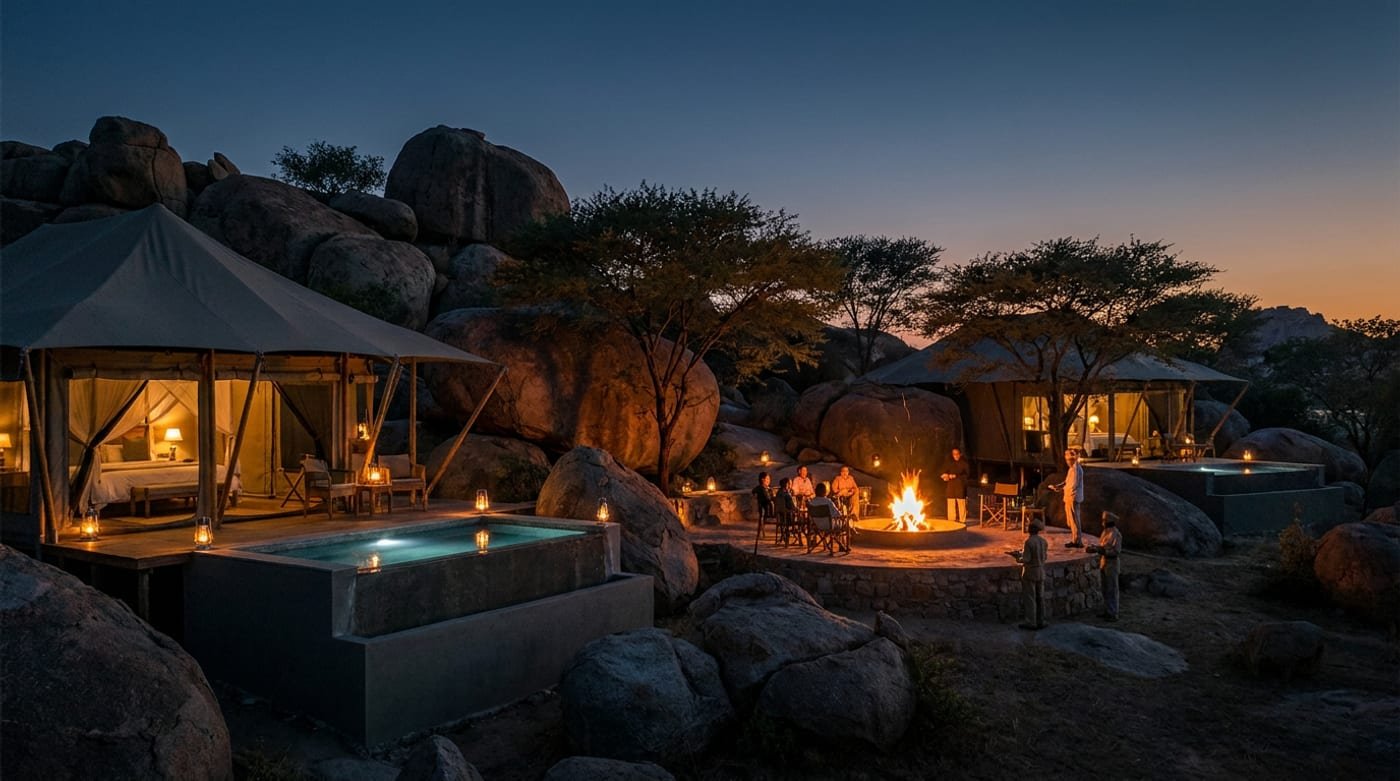
Jawai (Jawai Bandh), in the Aravalli foothills of Pali district, Rajasthan, has a semi-arid climate — hot summers, a short monsoon, and crisp, pleasant winters. Because the star attraction is a leopard safari in an open gypsy, the time of year shapes both your comfort and your odds of a great sighting.
The best time to visit Jawai is October to March, when the weather is cool and dry and winter birds fill the dam. But the hot pre-monsoon months of April to June can be even better for leopard sightings. Here is exactly what to expect, month by month. For drive details, see our Jawai leopard safari guide.
Quick answer — Jawai by season
October–March (peak / best overall): Cool, dry, comfortable. Days around 20–30°C, cold mornings. Ideal for open-gypsy safaris, crocodile spotting and winter migratory birds. The most popular window — book ahead.
April–June (best for sightings): Hot, 35–45°C, but leopards stay close to shrinking water and the bare hills make them easy to spot. Trade comfort for the strongest sighting odds.
July–September (monsoon): Some rain, lush green hills, dramatic skies, fewer visitors and lower rates. Sightings are still good and the landscape is at its most photogenic.
Month-by-month weather & wildlife
| Months | Weather | Best for |
|---|---|---|
| Oct – Nov | Mild & dry, 18–32°C, fresh post-monsoon green | Comfortable safaris, early winter birds (peak begins) |
| Dec – Feb | Cool, 8–28°C, cold mornings, clear skies | Best weather, migratory birds, crocodile spotting |
| Mar | Warming, 15–35°C, pleasant | Tail of peak season, good sightings, thinner crowds |
| Apr – Jun | Hot & dry, 30–45°C | Top leopard sightings (cats near water), low crowds |
| Jul – Sep | Monsoon, humid, lush green, occasional rain | Greenery, photography, off-season rates |
Peak season — October to March
This is when Jawai is most enjoyable. The monsoon has passed, leaving the hills green and the dam full, and the air turns cool and dry. Daytime temperatures sit in a pleasant 20–30°C range, though December and January mornings can drop near 8°C — genuinely cold in an open vehicle, so pack warm layers.
It is also the richest time for the Jawai dam: winter brings flamingos, bar-headed geese, cranes, pelicans and other migratory birds, while crocodiles bask along the banks. Leopard drives are comfortable and productive. As the most popular season, the better camps fill early — book well ahead. See our best resorts in Jawai roundup.
Best for sightings — April to June
If your priority is seeing a leopard, the hot pre-monsoon months are arguably the best of all. As temperatures climb to 40°C and beyond, the scattered waterholes shrink and leopards concentrate near the dam and remaining streams. The hills are bare and dry, so the cats are far easier to spot against the rock.
The catch is the heat — early-morning and late-evening drives are essential, and the midday hours are for resting in your camp. If you can handle the temperatures, you trade comfort for the best sighting odds of the year, with fewer fellow travellers around.
Monsoon — July to September
Jawai gets a modest monsoon rather than a drenching one, and the payoff is spectacular scenery: the granite hills turn emerald, the dam fills, and the light is wonderful for photography. Crowds thin out and rates fall, making it a quiet, atmospheric time to visit.
Sightings remain good, though occasional rain can shorten a drive. Treat the monsoon as a slower, greener, more contemplative Jawai — and carry a light rain layer just in case.
What to pack
Oct–Mar: warm layers and a windproof jacket for cold open-gypsy mornings, plus lighter clothing for the warm afternoons.
Apr–Jun: light, breathable cottons, a hat, sunglasses, high-SPF sunscreen and plenty of water for the heat.
Jul–Sep: a light rain jacket, quick-dry clothes and insect repellent, alongside comfortable safari wear.
Frequently asked
Love Jawai? You could own a resort here — and earn from it.
Beyond visiting, Jawai is one of India's strongest branded-resort investment markets. Own a registered unit in a 5-star resort and earn 8–9% assured returns for five years, then a 50% share of net resort profit — with complimentary owner stays. ResortWealth is an independent advisor that compares projects across developers and brands, so you get the right one.