
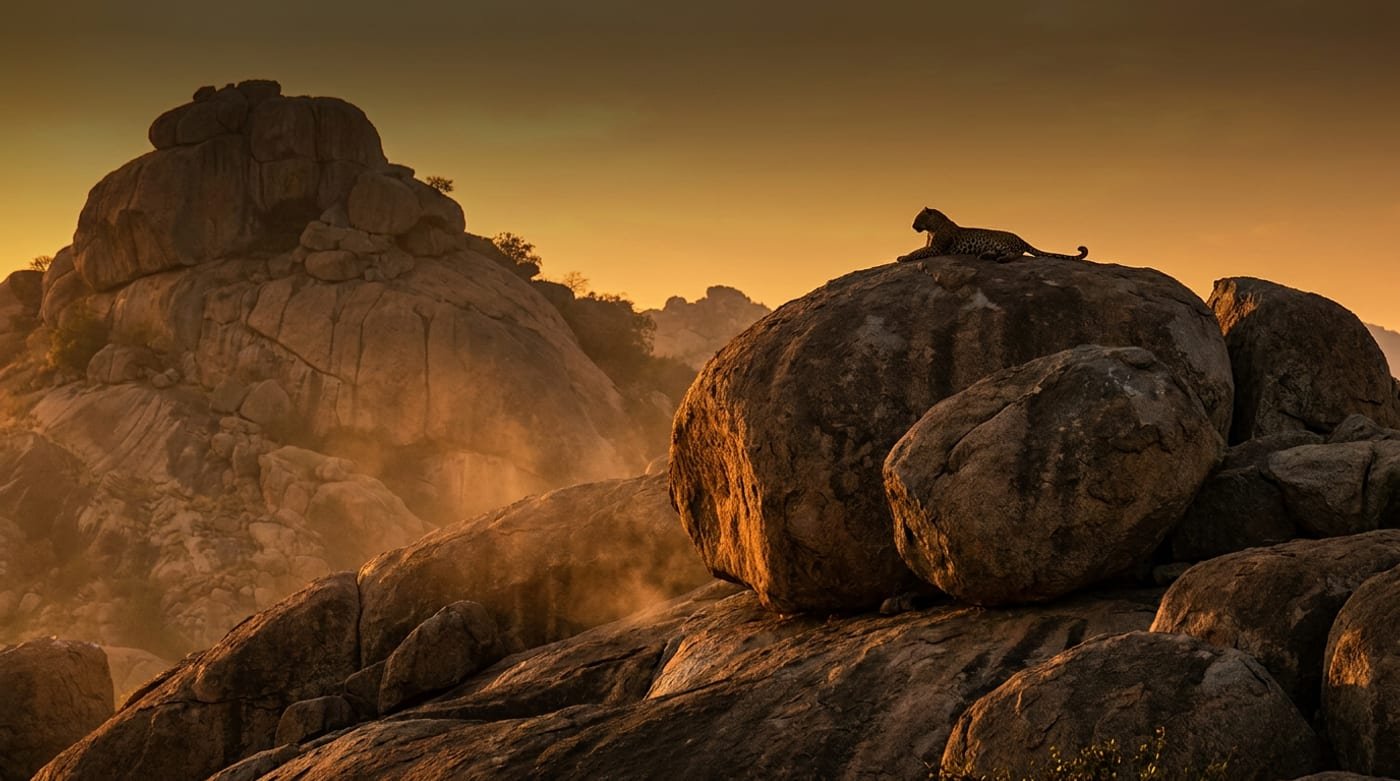
Jawai Dam — known locally as Jawai Bandh — is the vast reservoir that gives the whole region its name and its lifeblood. Built across the Jawai river in the Pali district of Rajasthan and commissioned in the 1950s by the Maharaja of Jodhpur, Umaid Singh, it is the largest dam in western Rajasthan and the permanent water source that draws leopards, crocodiles and migratory birds to the surrounding granite hills.
For visitors, the dam is far more than an engineering feat. Its glassy expanse mirrors the rounded granite kopjes around it, marsh crocodiles bask along the shallows, and in winter the water fills with flamingos, cranes and geese. This guide covers the reservoir itself, its wildlife, the best sunset spots, the ideal season and how to reach it. For the wider region, see our places to visit in Jawai and Jawai leopard safari guides.
The reservoir & the granite hills
Construction of Jawai Bandh began in 1946 and was completed in 1957, creating the biggest reservoir in western Rajasthan and the main supply of drinking and irrigation water for Pali and Jodhpur. The dam sits in a dramatic bowl of ancient granite hills — the same rounded outcrops, or kopjes, where Jawai's famous leopards den.
The combination of still water and bare, sculptural rock is what makes the landscape so striking. The reservoir level rises and falls with the monsoon, spreading wide and blue after a good year and shrinking to expose mudflats and grazing land in the dry months. Either way, the encircling hills, temples and Rabari shepherd country give every view a timeless, cinematic quality.
Crocodiles of Jawai Bandh
Jawai Dam holds one of Rajasthan's most notable populations of marsh (mugger) crocodiles, with wildlife censuses counting several hundred animals in and around the reservoir. They are most easily seen basking on the banks and rocks in the cooler hours, especially on winter mornings, and a boat or shoreline crocodile-sighting outing is a popular add-on to a leopard safari.
What makes Jawai unusual is the same coexistence that defines its leopards: local Rabari communities live alongside the crocodiles around a shared water source with remarkably little conflict. Always keep a safe distance from the water's edge and follow your guide's instructions when crocodile-watching.
Migratory birds & sunset
In winter the reservoir becomes a magnet for waterbirds. From roughly November to February the shallows fill with flamingos, bar-headed geese, demoiselle and sarus cranes, pelicans, painted storks and spoonbills, with raptors hunting overhead — well over a hundred species pass through across the season. For a focused birding outing, see our Jawai bird watching guide.
The dam is also Jawai's premier sunset spot. As the light drops, the water turns gold and the granite hills glow pink and copper, with camel and sheep caravans often crossing the foreground. Many camps run an evening drive that ends at a quiet bank for sundowners over the reservoir.
Quick facts
| Detail | Information |
|---|---|
| Location | Jawai Bandh, Pali district, Rajasthan |
| Built | Commissioned 1957 (works begun 1946) by Maharaja Umaid Singh of Jodhpur |
| Wildlife | Marsh crocodiles, winter migratory birds, leopards in nearby hills |
| Best season | October to March (birds & comfortable weather) |
| Best time of day | Early morning for crocodiles and birds; evening for sunset |
| Nearest railhead | Jawai Bandh / Falna on the Ahmedabad–Jodhpur line |
Best time to visit
The best overall window is October to March, when the weather is cool and dry and the reservoir is full from the monsoon. This is also when migratory birds are present in the greatest numbers and when basking crocodiles are easiest to spot in the morning sun.
The hot pre-monsoon months (April to June) are uncomfortable but excellent for wildlife, as shrinking water concentrates crocodiles, birds and even leopards near the dam. The monsoon (July to September) brings lush green hills, a brimming reservoir and far fewer visitors. See our Jawai leopard safari guide for seasonal safari timings.
How to reach Jawai Dam
Jawai Bandh sits roughly midway between Udaipur (about 150 km, 3 hours) and Jodhpur (about 160 km, 3 hours), the two nearest airports. The closest railway station is Jawai Bandh / Falna on the Ahmedabad–Jodhpur line, just a short drive from the reservoir.
Most visitors arrive by road from Udaipur or Jodhpur and base themselves at one of the camps around Bera and Jawai Bandh, reaching the dam itself on a guided drive. Browse our places to visit in Jawai guide to pair the dam with leopard country and the surrounding villages.
Frequently asked
Love Jawai? You could own a resort here — and earn from it.
Beyond visiting, Jawai is one of India's strongest branded-resort investment markets. Own a registered unit in a 5-star resort and earn 8–9% assured returns for five years, then a 50% share of net resort profit — with complimentary owner stays. ResortWealth is an independent advisor that compares projects across developers and brands, so you get the right one.