
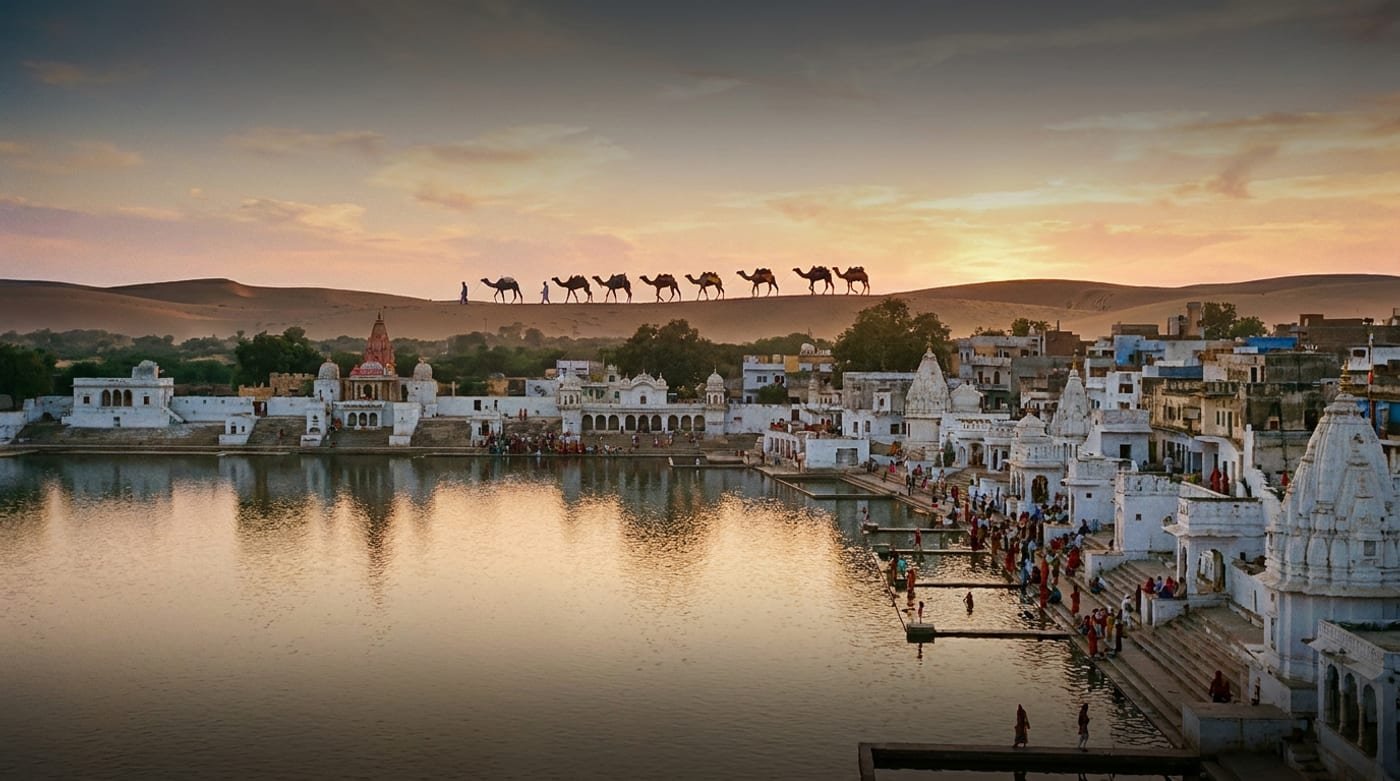
Pushkar sits on the edge of the Thar Desert in Rajasthan, so its climate swings between scorching summers and pleasantly cool winters. Because it is a desert town, the time of year you choose makes a big difference to how comfortable — and how lively — your visit will be.
The best time to visit Pushkar is from October to March, when daytime heat eases into warm, sunny days and cool evenings, ideal for temple visits, the bazaar and camel safaris. November is extra special: it brings the legendary Pushkar Camel Fair. Here is exactly what to expect month by month.
Quick answer — Pushkar by season
October–March (peak / best): Warm, sunny days (20–28°C) and cool evenings. Ideal for sightseeing, camel safaris and the November Camel Fair. This is the season to plan around.
April–June (summer): Very hot and dry, often 38–45°C. Sightseeing is tough by midday, but rates are low and crowds thin. For early risers and budget travellers only.
July–September (monsoon): Modest rain brings the desert a brief green flush and cooler, humid air (around 25–35°C). Pleasant in patches, with off-season prices and fewer tourists.
Month-by-month weather
| Months | Weather | Best for |
|---|---|---|
| Oct – Nov | Warm days, cool nights, 20–30°C | Camel Fair (Nov), sightseeing, photography (peak) |
| Dec – Feb | Cool & sunny, 8–25°C, chilly nights | Comfortable sightseeing, safaris, honeymoon |
| Mar – Apr | Warming up, 25–38°C | Fewer crowds, Holi, lower rates |
| May – Jun | Very hot & dry, 38–45°C | Budget trips, early-morning visits only |
| Jul – Sep | Humid, light monsoon, 25–35°C | Greenery, off-season deals, mist lovers |
Peak season — October to March
This is when Pushkar is at its best. The fierce desert summer is over, leaving warm, sunny days in the low-to-mid 20s°C and cool, comfortable evenings. It is perfect for walking the ghats, exploring the bazaar, climbing to the hilltop temples and heading into the dunes on a camel safari at sunset.
December and January bring genuinely chilly nights, dropping to around 8–10°C, so pack a warm layer. This is also the most popular and festive stretch, so the better hotels and desert camps book up early — reserve well ahead, and far in advance if you are coming for the Camel Fair.
The Pushkar Camel Fair — November
The Pushkar Camel Fair (Pushkar Mela) is the town's signature event, usually held over a week in November around the Kartik Purnima full moon. Thousands of camels, horses and cattle are traded, decorated and paraded, alongside folk music and dance, moustache and turban competitions, a Ferris-wheel fairground and a vast tented bazaar.
It is one of India's most photogenic spectacles and draws huge domestic and international crowds. If you want to attend, book accommodation and desert camps months ahead and expect premium prices. Prefer a quieter Pushkar? Visit a few weeks before or after the Mela for the same fine weather without the throngs.
Summer & monsoon — April to September
April to June is the desert at its harshest, with temperatures often climbing past 40°C and little shade. Sightseeing is best limited to early mornings and evenings, but you will find the lowest rates and the thinnest crowds of the year. Holi, in March, is a vivid time to visit just before the heat peaks.
The monsoon from July to September brings only modest rainfall to this arid region, but enough to cool the air, raise the lake level and give the surrounding hills a short-lived green flush. It is humid rather than wet, and a fair off-season choice for travellers chasing value and calm.
What to pack
Oct–Mar: light cottons for the day plus a warm jacket and shawl for cool desert evenings; comfortable walking shoes and modest clothing for temples.
Apr–Jun: loose, light cottons, a sun hat, sunglasses, strong sunscreen and plenty of water for the heat.
Jul–Sep: light, breathable clothes, a compact umbrella or rain layer, and sandals that handle the occasional shower.
Frequently asked
Love Pushkar? You could own a resort here — and earn from it.
Beyond visiting, Pushkar is one of India's strongest branded-resort investment markets. Own a registered unit in a 5-star resort and earn 8–9% assured returns for five years, then a 50% share of net resort profit — with complimentary owner stays. ResortWealth is an independent advisor that compares projects across developers and brands, so you get the right one.