
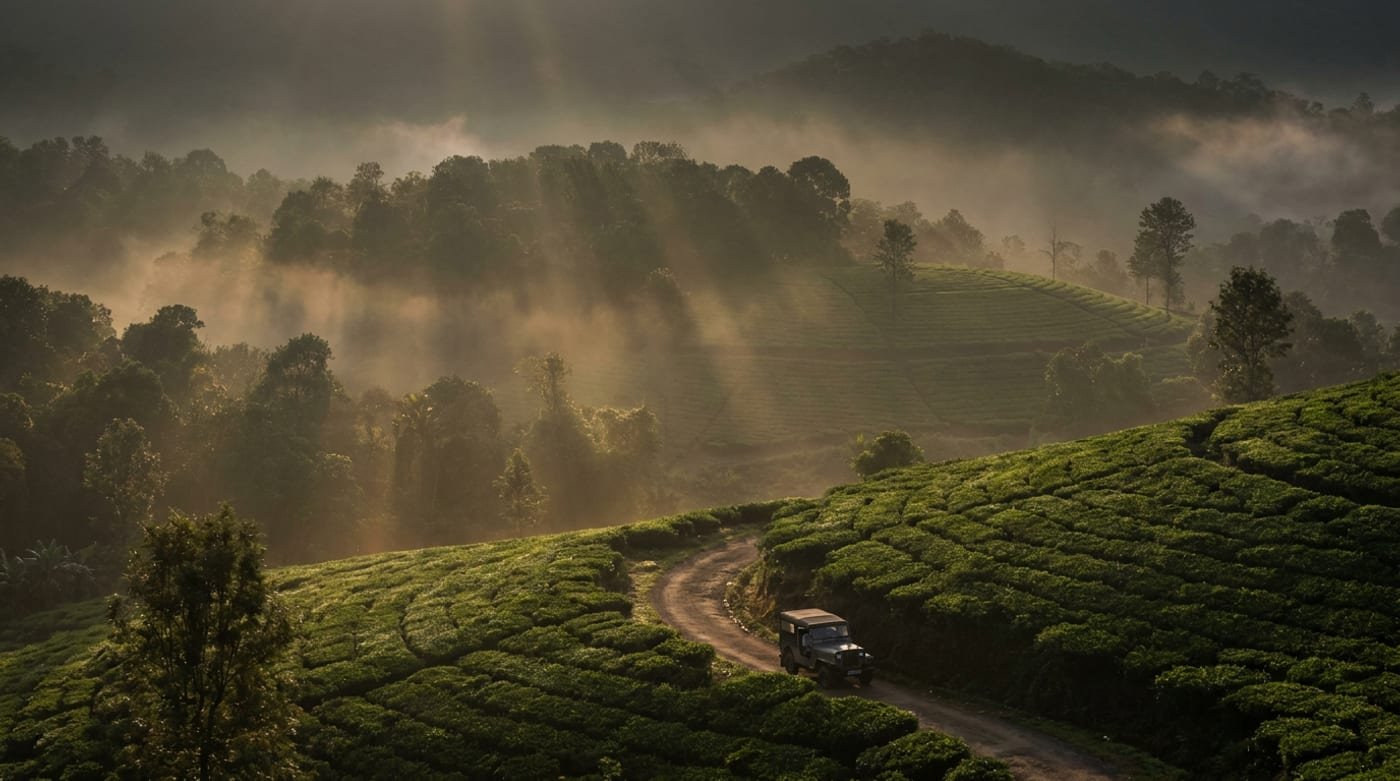
Coorg — Kodagu, the "Scotland of India" — sits high in the Western Ghats of Karnataka, wrapped in coffee plantations, misty hills and waterfalls. Because it is a hill station, its weather is pleasant for most of the year, but the experience changes dramatically by season.
The best time to visit Coorg is from October to March, when the monsoon has left the hills lush, the weather is cool and dry, and conditions are perfect for sightseeing, plantation walks and trekking. Here is exactly what to expect month by month.
Quick answer — Coorg by season
October–March (peak / best): Cool, dry, green. Daytime 15–28°C. Ideal for everything — sightseeing, coffee tours, trekking, honeymoons. This is the season to plan around.
July–September (monsoon): Heavy rain, but the most dramatically green and atmospheric. Waterfalls (Abbey, Iruppu) are in full flow. Great for those who love mist and lower crowds — pack for rain.
April–June (summer): Warmer (up to 33°C) but still cooler than the plains. February–March brings the magical white coffee blossom, when estates smell of jasmine.
Month-by-month weather
| Months | Weather | Best for |
|---|---|---|
| Oct – Feb | Cool & dry, 15–28°C, misty mornings | Sightseeing, trekking, honeymoon (peak season) |
| Feb – Mar | Warm days, coffee blossom in bloom | Plantation walks, photography, fragrant estates |
| Apr – Jun | Warm, up to 33°C, occasional showers | Fewer crowds, lower rates, summer escape |
| Jul – Sep | Heavy monsoon, lush green, full waterfalls | Greenery, waterfalls, mist lovers, off-season deals |
Peak season — October to March
This is when Coorg is at its finest. The southwest monsoon has passed, leaving the hills emerald-green and the streams full, but the skies clear up. Daytime temperatures sit in a comfortable 20–28°C range and mornings are cool and misty — perfect for a hot cup of estate coffee on a plantation deck.
Everything is open and at its best: Abbey Falls and Iruppu Falls are flowing, the trek to Tadiandamol (Coorg's highest peak) is doable, Dubare Elephant Camp is accessible, and the resorts are buzzing. December–January is also festive and popular, so book stays and the better plantation resorts well in advance.
Monsoon — July to September
If you love rain, mist and movie-like greenery, the Coorg monsoon is unforgettable. The entire region turns into a rainforest, the waterfalls roar, and the coffee plants drink it all in. Crowds thin out and resort rates drop, so it can be a wonderful, romantic, budget-friendly time.
The trade-off: heavy rain can disrupt treks and some outdoor activities, roads get slippery, and leeches appear on forest trails. Come prepared with rain gear, and treat it as a slow, cosy, indoors-and-views kind of trip rather than a packed itinerary.
Summer & coffee blossom — April to June
Coorg's elevation keeps summers far milder than the Karnataka plains. Late February into March is special: after the first pre-monsoon showers, the coffee estates burst into white blossom for a few days, filling the air with a jasmine-like fragrance — a bucket-list experience for plantation lovers.
April–June sees warmer afternoons but pleasant evenings, fewer tourists, and better deals on stays. A good choice if you want a quieter Coorg and don't mind a little heat at midday.
What to pack
Oct–Mar: light layers plus a warm jacket for cool mornings and evenings; comfortable walking shoes.
Jul–Sep: waterproof jacket, quick-dry clothes, sturdy shoes, and protection against leeches on trails.
Apr–Jun: light cottons for the day, a light layer for evenings, sunscreen and a hat.
Frequently asked
Love Coorg? You could own a resort here — and earn from it.
Beyond visiting, Coorg is one of India's strongest branded-resort investment markets. Own a registered unit in a 5-star resort and earn 8–9% assured returns for five years, then a 50% share of net resort profit — with complimentary owner stays. ResortWealth is an independent advisor that compares projects across developers and brands, so you get the right one.