
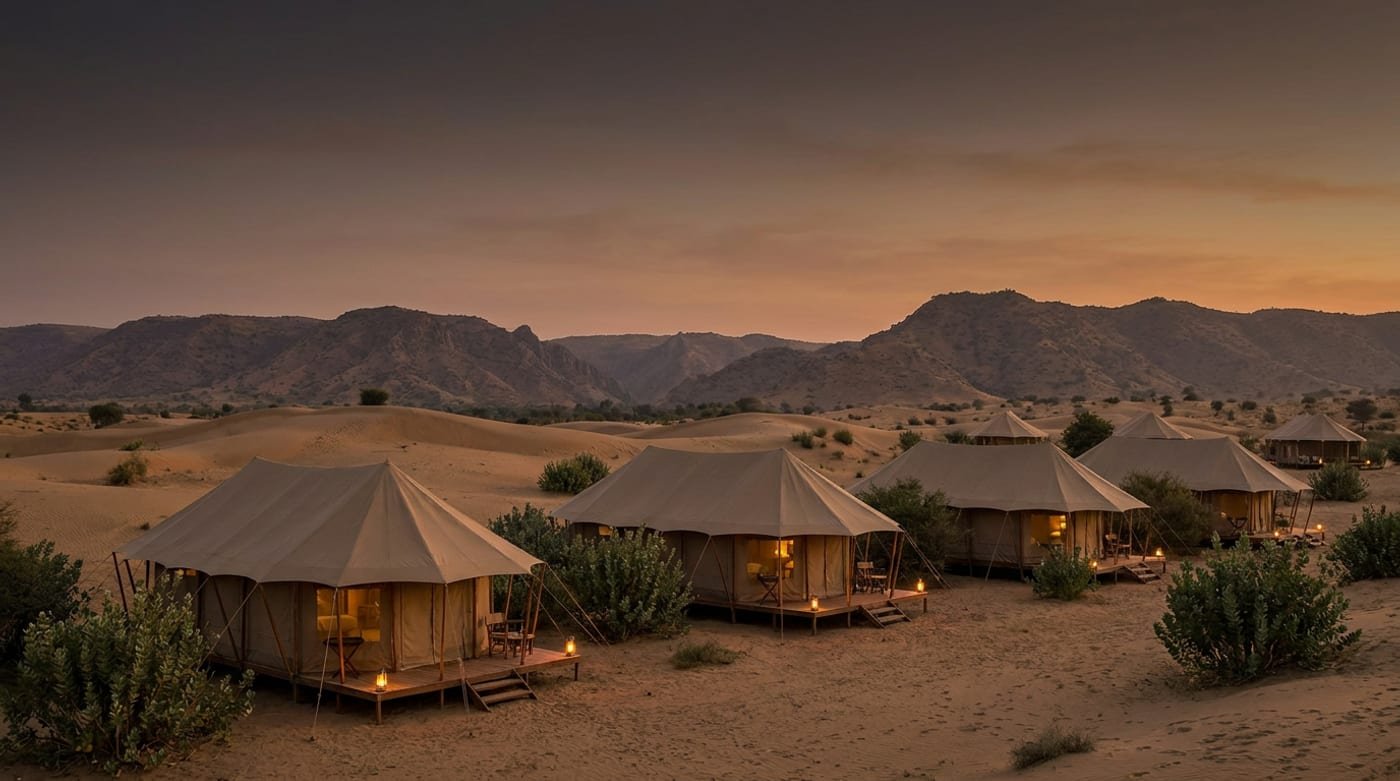
For most of the year Pushkar is a small, sleepy pilgrimage town wrapped around a holy lake. But for around a week each autumn it transforms into the stage for the Pushkar Camel Fair (Pushkar Mela) — one of the largest camel, horse and cattle fairs on earth, and one of Rajasthan's most photographed spectacles. Tens of thousands of traders, herders, pilgrims and travellers converge on the sand dunes beside the town, bringing with them caravans of camels, decorated livestock, folk performers and a carnival atmosphere.
This guide explains what the fair is, when it takes place, what actually happens across its days, and how to plan a visit. Pair it with our places to visit in Pushkar guide, the wider list of things to do in Pushkar, and our note on the best time to visit Pushkar.
What is the Pushkar Camel Fair?
The Pushkar Camel Fair began centuries ago as a livestock trading event, timed to coincide with the sacred Kartik Purnima bathing festival at Pushkar Lake. Herders from across Rajasthan and neighbouring states walk their camels, horses and cattle to Pushkar to buy, sell and trade — and around that commercial core, a huge religious and cultural festival has grown up.
Today the fair has two faces. There is the working livestock mela on the dunes, where thousands of camels are groomed, decorated, raced and sold. And there is the cultural carnival of competitions, folk music and dance, a fairground, food stalls, handicraft markets and a vast tented camp city that springs up overnight. Pilgrims, meanwhile, come to bathe in the holy lake on Kartik Purnima, believed to be especially auspicious, making the fair a rare blend of commerce, faith and festivity.
When is the Pushkar Camel Fair?
The fair is held every November, timed around Kartik Purnima — the full-moon day of the Hindu month of Kartik. Because it follows the lunar calendar, the exact dates shift each year, but it almost always falls in early-to-mid November and runs for roughly a week, building from quieter trading days to the climactic full-moon bathing day.
The early days are dominated by livestock trading and tend to be best for photographers wanting authentic herder scenes; the later days bring the bigger crowds, competitions and cultural programme. Always check the official Rajasthan Tourism calendar for the confirmed dates in your travel year, as they move by a couple of weeks from one year to the next.
What happens at the fair
The livestock trading is the original heart of the mela — camels, horses and cattle are bought and sold, with animals groomed, shaved into patterns, hennaed and hung with bells and beads for display. Alongside it runs a programme of light-hearted competitions: camel races and camel-decoration contests, the famous longest-moustache competition, turban-tying, matka phod (pot breaking), tug-of-war and even a traditional bridal contest.
Cultural events fill the evenings with Rajasthani folk music and dance, puppet shows and devotional singing, while a fairground with a giant wheel and stalls keeps the carnival mood going. Hot-air balloon rides and tethered balloons have become a modern highlight, offering a sweeping view over the dunes, the tented city and the camel lines below. Throughout, the holy lake and its 52 ghats draw a steady stream of pilgrims, peaking with the mass bathing and lamp-lit aarti on Kartik Purnima night.
Pushkar Mela: a typical day-by-day flow
| Phase | Roughly when | Highlights |
|---|---|---|
| Opening / trading days | First 2-3 days | Livestock arrives; camel and horse trading at its busiest; calm, authentic herder scenes ideal for photography. |
| Competition days | Middle days | Camel races and decoration contests, longest-moustache and turban-tying competitions, matka phod and tug-of-war. |
| Cultural programme | Throughout, peaking mid-fair | Rajasthani folk music and dance, puppet shows, fairground rides, handicraft and food stalls, hot-air balloon rides. |
| Kartik Purnima (finale) | Full-moon day | Mass holy dip at the ghats, grand evening aarti with floating lamps; the most sacred and crowded day of the fair. |
The fair follows the lunar calendar, so exact dates change each year. This is a generic guide to how the days usually unfold across the roughly week-long event.
Tips for visiting the Pushkar Camel Fair
Book accommodation and tented-camp stays months in advance — the town fills up completely and prices rise sharply during the fair. Arrive a day early to settle in, and visit the dunes at sunrise and sunset for the best light and the most active livestock scenes. November days are warm but desert nights are cold, so pack layers.
Always ask before photographing people and their animals, and consider a small token in return; respect that this is a working livestock fair and a sacred pilgrimage, not a staged show. Stay hydrated, wear comfortable shoes for sandy, uneven ground, keep valuables secure in the crowds, and remember Pushkar is a holy town where alcohol and meat are traditionally not served and modest dress is expected near the ghats.
Frequently asked
Love Pushkar? You could own a resort here — and earn from it.
Beyond visiting, Pushkar is one of India's strongest branded-resort investment markets. Own a registered unit in a 5-star resort and earn 8–10% assured annual returns — with complimentary owner stays. ResortWealth is an independent advisor that compares projects across developers and brands, so you get the right one.