
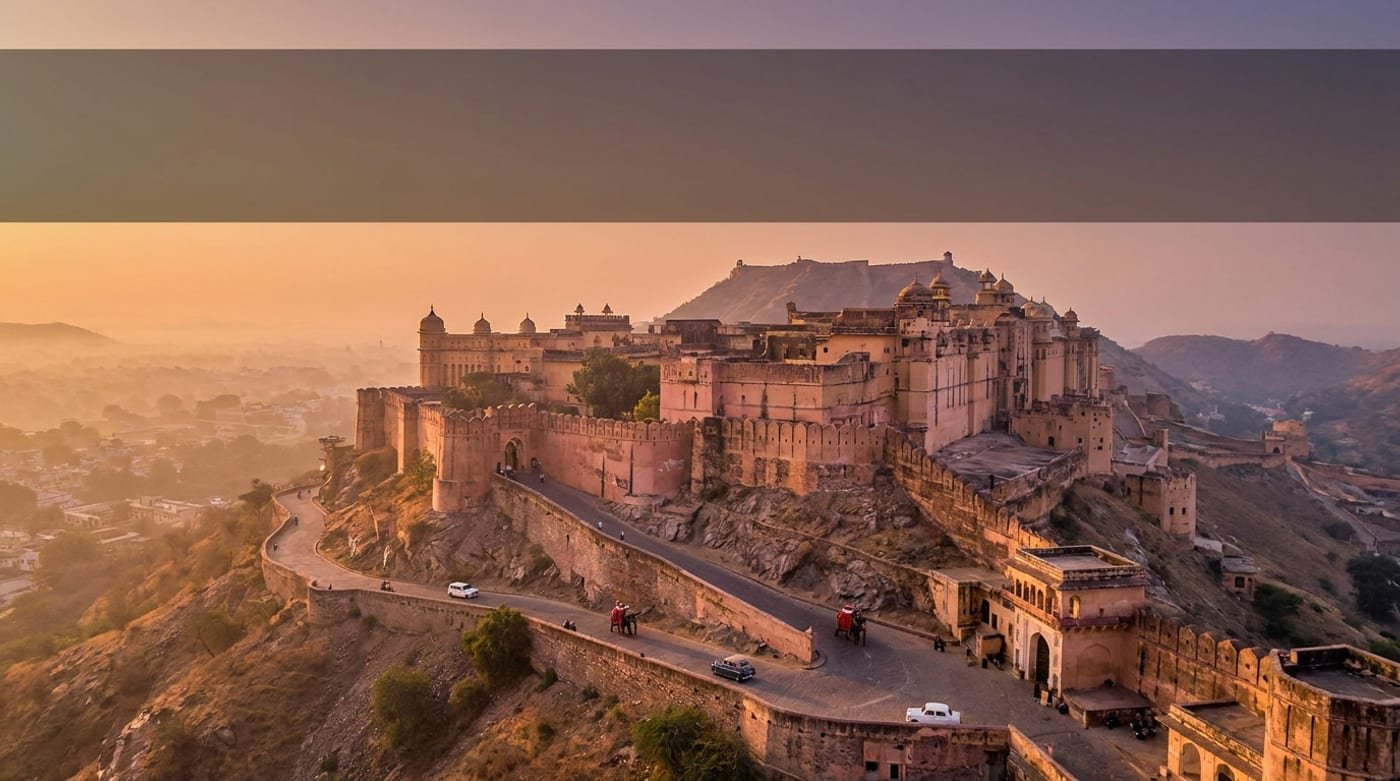
Jaipur sits on the edge of the Thar Desert in Rajasthan, so its climate is defined by hot, dry summers, a short monsoon and pleasantly cool winters. Because most sightseeing here means exploring open forts, palaces and bazaars on foot, the weather makes a real difference to your trip.
The best time to visit Jaipur is from October to March, when daytime temperatures are comfortable, evenings are cool and the city's biggest festivals take place. Here is exactly what to expect month by month, plus what to pack.
Quick answer — Jaipur by season
October–March (peak / best): Cool, dry and sunny. Daytime 18–28°C, crisp evenings. Ideal for forts, palaces, shopping and festivals. This is the season to plan around.
July–September (monsoon): Modest rain brings down the heat and greens the Aravallis. Fewer crowds and lower rates, with the occasional heavy downpour — a good-value off-season choice.
April–June (summer): Very hot and dry, often 38–45°C. Best avoided for outdoor sightseeing, though hotel deals are at their cheapest and the desert light is dramatic at dawn and dusk.
Month-by-month weather
| Months | Weather | Best for |
|---|---|---|
| Oct – Nov | Warm days, cool evenings, 20–32°C | Sightseeing, Diwali lights, comfortable weather |
| Dec – Feb | Cool & dry, 8–25°C, sunny days | Peak season, festivals, Jaipur Literature Festival |
| Mar | Pleasant warming up, 18–32°C | Holi celebrations, shoulder-season value |
| Apr – Jun | Very hot & dry, 35–45°C | Cheapest rates, fewer tourists (heat-tolerant only) |
| Jul – Sep | Monsoon, humid, 25–35°C, some rain | Greenery, Teej festival, off-season deals |
Peak season — October to March
This is when Jaipur is at its finest. The summer heat has broken, the monsoon has passed, and the city enjoys clear blue skies with comfortable daytime temperatures of around 20–28°C. Mornings and evenings in December and January can be genuinely cold, dropping to 8–10°C, so pack a warm layer.
It is also festival season: Diwali lights up the bazaars in October–November, the famous Jaipur Literature Festival draws crowds in late January, and Holi colours the city in March. Because this is the busiest and most pleasant window, book hotels — especially heritage and palace stays — well in advance.
Summer — April to June
Jaipur summers are intense. From April the mercury climbs fast, and by May–June daytime highs of 40–45°C are common, with dry, dusty heat. Sightseeing at exposed forts becomes uncomfortable from late morning, so plan visits for early morning and after sunset, and stay hydrated.
The upside is value: this is the cheapest time to visit, with deep discounts on hotels and far fewer tourists. If you can tolerate the heat and structure your days around it, you can enjoy the same monuments with the bonus of a poolside palace stay at a fraction of peak rates.
Monsoon — July to September
The monsoon brings welcome relief from the summer heat. Rainfall in Jaipur is moderate rather than torrential, freshening the air and turning the Aravalli hills green. Temperatures settle into a more bearable 25–35°C, though humidity rises and the odd heavy shower can interrupt sightseeing.
It is a quiet, atmospheric and budget-friendly time to visit. The Teej festival in August, celebrating the monsoon and the goddess Parvati, fills the streets with processions and swings — a colourful reason to brave the rains.
What to pack
Oct–Mar: light layers for the day plus a warm jacket and shawl for cool mornings and evenings; comfortable walking shoes for the forts.
Apr–Jun: light, breathable cottons, a wide-brimmed hat, sunglasses, high-SPF sunscreen and a reusable water bottle — heat protection is essential.
Jul–Sep: a compact umbrella or light rain jacket, quick-dry clothing and footwear that handles wet streets.
Frequently asked
Love Jaipur? You could own a resort here — and earn from it.
Beyond visiting, Jaipur is one of India's strongest branded-resort investment markets. Own a registered unit in a 5-star resort and earn 8–10% assured annual returns — with complimentary owner stays. ResortWealth is an independent advisor that compares projects across developers and brands, so you get the right one.