
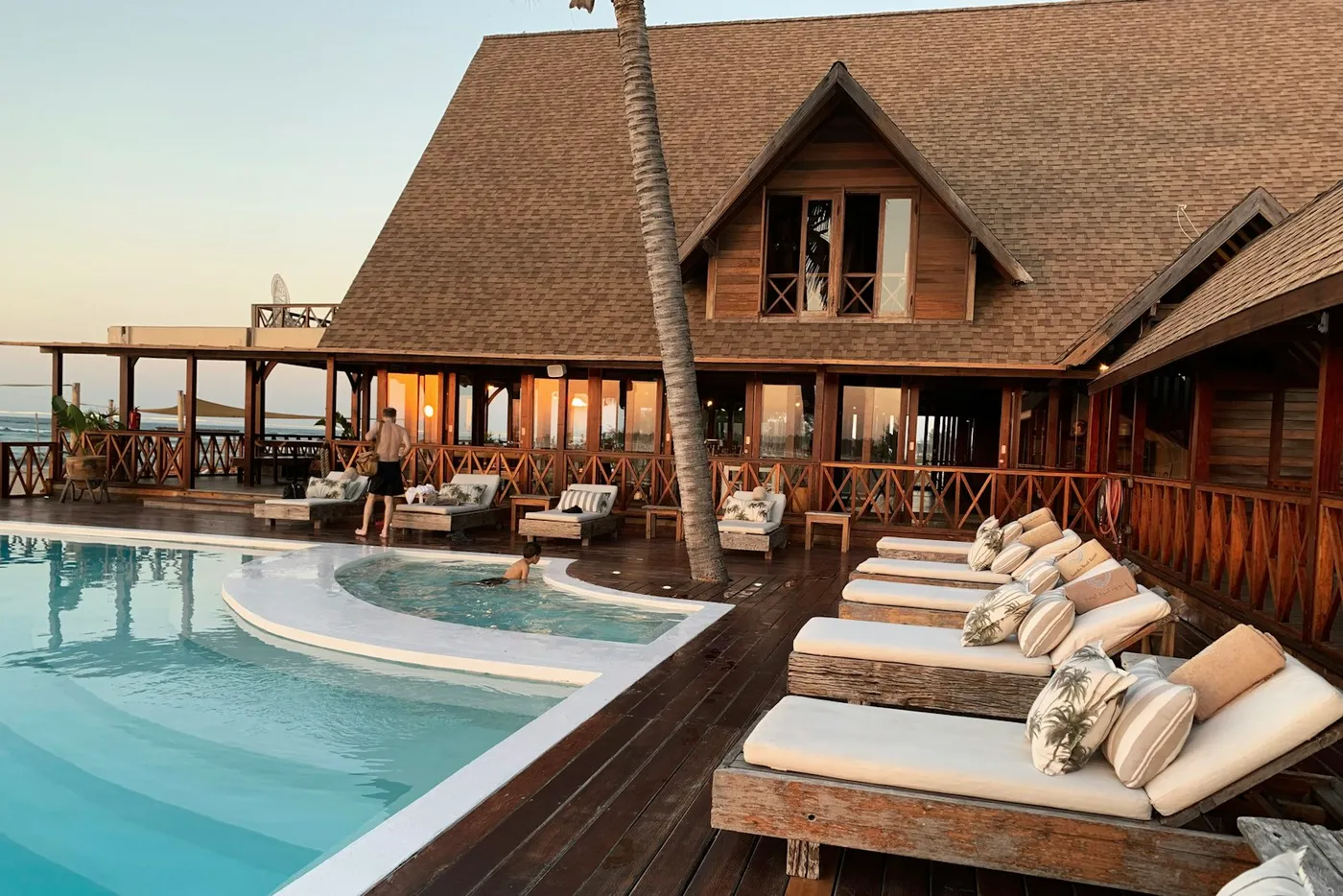
This first edition of the ResortWealth India Branded Resort Investment Index reviews the branded sale-leaseback market across seven destinations — Jaipur, Goa, Udaipur, Pushkar, Jawai, Coorg, and Sakleshpur. Drawing on public-domain data and ResortWealth market observation, we discuss contractually assured rental yields, branded inventory, hotel-chain operator presence, occupancy and ADR ranges, NRI investment patterns, and a 7-destination investment-viability assessment. All figures are indicative; methodology and references are disclosed.
Headline numbers
Across branded sale-leaseback projects in these destinations, publicly marketed annual rental yields for the first five years cluster between 8.0% and 10.0%, with 9% the most commonly offered rate; from year six the featured projects move to a 50% share of net resort profit, with no floor. Yields above 10% are typically attached to smaller / wellness-format projects with shorter operating histories. Based on publicly marketed lease terms; figures indicative.
Wyndham, Regenta / Royal Orchid, Dolce by Wyndham, and KAMAH (Wyndham flag) account for the large majority of branded sale-leaseback inventory in the covered destinations. Directional estimate based on RERA-filed project data; figures approximate.
ResortWealth's featured branded projects are structured as Sale-Leaseback agreements — the owner holds registered title in perpetuity while the operator runs the unit under a long-term lease, with no fixed expiry to renegotiate. The assured rent itself is a five-year covenant; from year six the owner receives a 50% share of net resort profit rather than a fixed rent. Fixed-tenure lease structures (commonly 10–20 years) still exist elsewhere in the market, primarily on wellness-farms and smaller-format developments.
Industry estimates place NRI participation in Indian real estate at roughly 15%, trending toward 20% — and branded, fully-managed sale-leaseback is a natural fit for overseas investors who cannot manage property on the ground. US-resident NRIs are widely reported as the largest single source, followed by UAE- and UK-resident NRIs. These are public-domain industry estimates, not a ResortWealth investor survey.
In ResortWealth's composite investment-viability assessment, Jaipur scores highest — driven by year-round tourism demand, the Golden Triangle anchor effect, UNESCO World Heritage City inscription, and a high destination-wedding share. Goa (North) and Udaipur follow. This ranking reflects ResortWealth's editorial view, not a statistical survey.
Jaipur, Goa, Udaipur, Pushkar, Jawai, Coorg, and Sakleshpur account for the bulk of new branded sale-leaseback project supply. Inventory in Shimla, Manali, Ooty, and other established hill stations is dominated by older, non-branded formats and is excluded from this index.
Inside the report
- 01 Executive Summary p. 5
- 02 Market Structure — Who builds, who flags, who advises p. 7
- 03 Yield Bands — What investors actually receive p. 5
- 04 City Deep-Dive: Jaipur, Goa, Udaipur, Coorg, Pushkar, Jawai, Sakleshpur p. 10
- 05 Comparison: Sale-Leaseback vs Fractional Ownership vs REIT p. 4
- 06 NRI Investment Flows — Source countries, ticket sizes, preferences p. 4
- 07 Investment Viability Index — 2026 destination ranking p. 3
- 08 Outlook 2026–2028 p. 3
Executive Summary
A one-page brief for time-pressed readers. The five biggest market shifts of 2026 and what they mean for investors.
India's branded sale-leaseback resort investment market reached a structural inflection point in 2026. Three concurrent forces drove this: SEBI's formalisation of the Small and Medium REIT regulation (which legitimised fractional ownership but, paradoxically, made sale-leaseback the cleaner choice for investors prioritising legal title), the post-pandemic surge in domestic luxury travel that lifted ADRs in heritage and wellness destinations, and the maturation of NRI investment flows from US-resident Indians seeking rupee-denominated yield assets.
For investors, the implications are clear: the 8-9% five-year assured yield band is durable, and what follows it is a profit share rather than a fixed rent; the 7 destinations covered in this index account for >80% of new branded supply; and the structural advantage of registered sale-leaseback (over fractional ownership or unbranded resort homes) has widened, not narrowed.
Market Structure — Who builds, who flags, who advises
The three-party ecosystem (developer, hotel chain operator, channel-partner advisor) and how it has consolidated.
India's branded sale-leaseback market operates through a three-party structure that has consolidated meaningfully since 2022. Developers (Fine Acers and a handful of others) raise project capital by selling registered units under sale-leaseback contracts. Hotel chains (Wyndham, Regenta / Royal Orchid, Dolce, IHG, others) sign 10-20 year operating agreements with the developer. Independent channel-partner advisors (ResortWealth and peers) connect retail and HNI investors to vetted projects.
The market remains structurally fragmented on the advisory side, with no single player holding more than ~15% of channel-partner share by transaction value. This contrasts with the more consolidated fractional ownership advisory space (PropertyShare, hBits, MyreCapital).
| Operator | Relative SLB presence (indicative) | Geography concentration |
|---|---|---|
| Wyndham Hotels & Resorts (incl. Dolce, Wyndham Grand, KAMAH) | Largest | Pan-India |
| Regenta / Royal Orchid | Significant | Rajasthan, North India |
| IHG (Holiday Inn, Crowne Plaza) | Moderate | Mixed |
| Marriott (Courtyard, Aloft) | Moderate | Tier-1 cities |
| Independent / boutique | Niche | Wellness, hills |
Yield Bands — What investors actually receive
Contractual yield rates by destination, brand, and unit type. Where the 10% rates sit and what trade-offs they reflect.
Across branded sale-leaseback projects in the covered destinations, publicly marketed assured yields for the first five years sit in a fairly tight 8–9% band; thereafter income on the featured projects is a 50% share of net resort profit — variable, with no minimum. 9% is the most commonly offered rate, with 8% typically on flagship Wyndham Grand properties in mature markets and 9.5–10% on wellness-format and smaller-keys projects in emerging destinations.
Higher yields almost always correlate with one or more of: (a) shorter operating track record of the developer, (b) early-stage destination supply build-out, (c) wellness-format positioning (smaller keys, different revenue profile), (d) the terms of the post-year-five profit share.
A 10% yield is not "better" than 9% in absolute terms — it usually compensates for additional counterparty or destination risk. Read the lease clauses carefully on the post-year-five profit share, exit, and buy-back before assuming the headline rate is comparable across projects.
City Deep-Dive: Jaipur, Goa, Udaipur, Coorg, Pushkar, Jawai, Sakleshpur
One sub-section per destination: keys built, keys planned, ADR ranges, occupancy bands, and a one-line investment thesis.
The seven covered destinations represent over 80% of new branded sale-leaseback supply in 2026. Each is profiled on six dimensions: tourism demand drivers, current branded supply, planned supply over the next 36 months, ADR range (Q4 2025 high-season), occupancy range, and the investment thesis specific to that destination.
Destination ADR and occupancy ranges are drawn from public hospitality research (Hotelivate, JLL) and presented as indicative high-season ranges. Sub-sections for each city follow.
Comparison: Sale-Leaseback vs Fractional Ownership vs REIT
Cross-vehicle comparison on returns, liquidity, taxation, and legal title.
India's individual investor now has three legitimate vehicles for hospitality-and-resort real-estate exposure: branded sale-leaseback (this report's focus), fractional ownership via SEBI-regulated SM REIT structures (PropertyShare, Strata, and others), and listed REITs with hospitality assets (Embassy, Brookfield, Mindspace include limited hotel exposure).
Each vehicle optimises for a different priority: sale-leaseback for five years of fixed income + clean legal title; SM REIT for liquidity + lower ticket size; listed REIT for daily-tradable exposure with broader commercial real-estate diversification.
| Parameter | Sale-Leaseback | SM REIT (Fractional) | Listed REIT |
|---|---|---|---|
| Annual yield | 8–9% fixed for 5 yrs, then 50% net-profit share | 7–10% projected | 6–8% distribution |
| Income certainty | Contractual for 5 yrs, then profit-linked | Variable | Variable |
| Liquidity | Real estate sale (weeks) | Secondary market | Same-day exchange |
| Ticket size | ₹40 L – ₹4 Cr+ | ₹10 – 25 L | ₹5,000+ |
| Legal title | Registered sale deed | SM REIT unit | Listed unit |
| SEBI regulated | No (RERA-regulated) | Yes (SM REIT) | Yes (REIT) |
NRI Investment Flows — Source countries, ticket sizes, preferences
Where the NRI capital comes from, how it flows, and what destinations it prefers.
NRIs are a growing share of demand for branded, fully-managed resort investment — public industry estimates put NRI participation in Indian real estate at roughly 15% and rising. The largest single source is widely reported as the United States, followed by the UAE, United Kingdom, Singapore, and Canada, broadly matching the Indian diaspora wealth distribution.
In ResortWealth's advisory experience, US-resident NRIs show a notable preference for Jaipur and Goa, while Gulf-resident NRIs are more evenly distributed across destinations. These are qualitative observations, not survey statistics.
Investment Viability Index — 2026 destination ranking
A composite scoring of the 7 destinations on demand stability, supply maturity, yield-risk balance, and exit liquidity.
The ResortWealth Investment Viability Index scores each of the 7 covered destinations on four sub-indices: demand stability (year-round tourism + structural anchors), supply maturity (branded-inventory build-out stage), yield-risk balance (assured yield vs counterparty exposure), and exit liquidity (secondary-market activity).
The 2026 ranking: (1) Jaipur, (2) Goa North, (3) Udaipur, (4) Coorg, (5) Pushkar, (6) Jawai, (7) Sakleshpur. Full sub-index scores and methodology in Chapter 8.
Outlook 2026–2028
Three forward views: yield band trajectory, new destination entrants, and the SM REIT competitive threat.
Our base-case 2026-28 outlook anticipates the 8-9% assured-yield band remaining stable as the marginal cost of capital for hospitality developers continues to track senior bank-debt rates. Significant compression of headline yields (to below 8%) would only be triggered by either a major rate-cut cycle or a structural shift in branded-hospitality risk perception.
Two new destinations are likely to enter the index by 2028: Rishikesh (wellness positioning) and Alibaug-Karjat (Mumbai metropolitan wellness belt). Both are early-stage but have meaningful branded-supply pipelines under construction.
How the data was compiled
This report is a synthesis of public-domain sources (RERA filings, Ministry of Tourism public data, FHRAI member directories) and published hospitality research (Hotelivate, JLL India, Knight Frank India), combined with ResortWealth's qualitative observation as an advisory firm. It is not the output of a proprietary statistical survey; all figures are directional estimates intended to inform, not to certify.
Scope: the report focuses on branded sale-leaseback projects that are (a) RERA-registered, (b) operating under a long-term franchise / management agreement with a recognised hotel chain, and (c) actively marketing investor units in 2026. Yield, lease-tenure and inventory figures are compiled from publicly marketed project information and public registries.
NRI participation figures are public-domain industry estimates and ResortWealth's qualitative advisory observation — not a statistical investor survey. Source-country and preference statements are directional market commentary.
Investment Viability assessment: each destination is scored by the ResortWealth team on four equally-weighted dimensions (demand stability, supply maturity, yield-risk balance, exit liquidity), based on public data and our market observation. The resulting ranking is an editorial assessment, not a statistical index.
Citations
-
Real Estate Regulatory Authority (RERA), Rajasthan
— Project registration database
https://rera.rajasthan.gov.in -
RERA Goa
— Project registration database
https://rera.goa.gov.in -
RERA Karnataka
— Project registration database
https://rera.karnataka.gov.in -
Ministry of Tourism, Government of India
— India Tourism Statistics 2025
https://tourism.gov.in -
Federation of Hotel & Restaurant Associations of India (FHRAI)
— Industry data and member directories
https://fhrai.com -
Hotelivate
— Hotels in India — Trends & Opportunities (public summary)
https://hotelivate.com -
JLL India
— Hotel Investments Outlook (annual)
https://jll.co.in -
Knight Frank India
— India Real Estate Wealth Report
https://knightfrank.co.in -
Securities and Exchange Board of India (SEBI)
— Small and Medium REIT Regulations 2024
https://sebi.gov.in -
Reserve Bank of India (RBI)
— Master Direction — Acquisition and Transfer of Immovable Property in India
https://rbi.org.in
Get the full India Branded Resort Investment Index 2026
Email us — receive the complete PDF (38 pages) plus an invitation to next quarter's data update. No spam, ever.
💬 Request via WhatsAppFor journalists & researchers
This report and its underlying data are free to cite with attribution. For raw-data requests, interviews with the authors, or commercial licensing, email partnerships@resortwealth.com or WhatsApp +91 98290 17524.